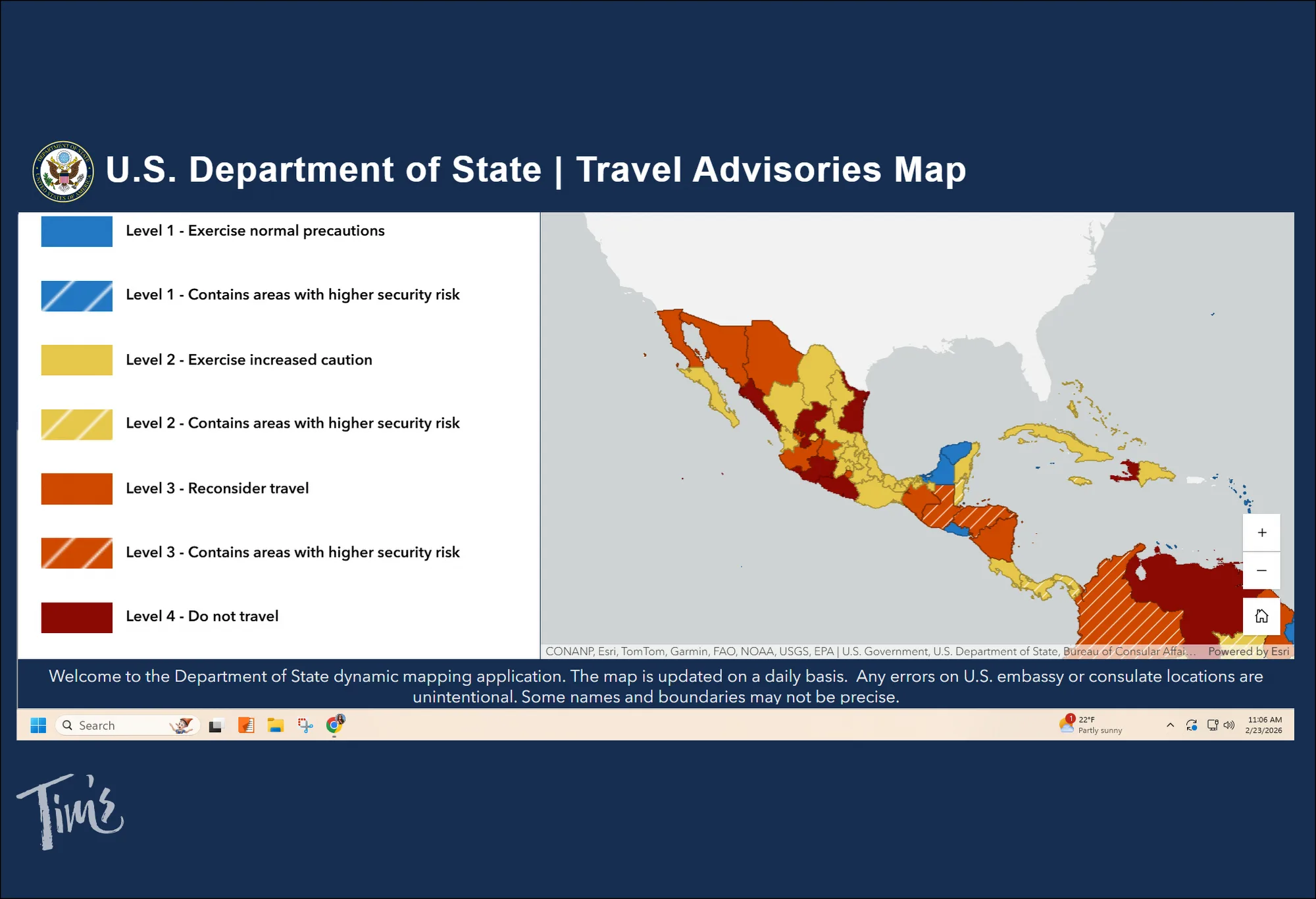
The landscape of international movement has transformed into a dynamic environment where entry requirements shift rapidly. To travel safely, legally, and without costly disruptions, individuals must master the complex network of a travel advisory current restrictions and safety rules established by sovereign nations and international health bodies. This guide serves as a comprehensive educational curriculum designed to equip travelers with the tools, knowledge, and analytical skills needed to navigate international borders seamlessly.
Learning Outcomes for Modern Border Crossing
By engaging with this travel literacy curriculum, you will transition from a passive passenger to an active, informed global traveler. Understanding the underlying mechanics of travel advisories prevents booking errors, unexpected quarantines, and legal complications at foreign customs checkpoints.
- Analyze government travel advisories to assess real-time security and health risks.
- Differentiate between mandatory entry restrictions and voluntary safety recommendations.
- Synthesize health certification requirements, including molecular test validity windows.
- Formulate a robust contingency plan for sudden border closures or quarantine mandates.
- Navigate digital credential systems and immigration pre-clearance portals efficiently.
Prerequisite Map for International Departure
Before enrolling in active travel planning, certain foundational documents and digital assets must be secured. Lacking these prerequisites will halt your progress at the check-in counter, regardless of your destination's specific rules.
- A passport with at least six months of validity remaining from your planned return date.
- Unrestricted access to official governmental portals, such as the Centers for Disease Control and Prevention (CDC) or local consular websites.
- A secure digital storage solution for encrypted health certificates and QR codes.
- An active travel insurance policy that explicitly covers epidemiological disruptions and medical evacuations.
- A secondary form of government-issued identification matching all reservation names exactly.
Syllabus: Master Travel Safety Matrix
This structured syllabus outlines the core modules required to achieve complete travel compliance. Use this matrix to track your preparation milestones before booking any non-refundable flights or accommodations.
| Module Name | Core Target Competency | Estimated Study Time | Expected Output Document |
|---|---|---|---|
| Advisory Decoding | Interpreting warning levels and geopolitical risk indices | 45 Minutes | Risk assessment profile |
| Health & Digital Passports | Navigating PCR, antigen, and digital QR code ecosystems | 60 Minutes | Validated digital health wallet |
| Transit Zone Logistics | Managing layover rules and dual-airport terminal connections | 30 Minutes | Flight transit itinerary map |
| Emergency Contingency | Establishing evacuation protocols and local support networks | 45 Minutes | Emergency contact sheet |
| Cultural Compliance | Aligning with local mask, curfew, and public space mandates | 30 Minutes | Local behavioral protocol list |
Lesson 1: Decoding Government Travel Advisories
Objective: To accurately interpret the multi-tiered warning systems used by global foreign ministries to communicate security and health risks.
Government travel advisories are not uniform; they use color-coded or numerical scales (typically Levels 1 through 4) to rank destination safety. Level 1 suggests exercising normal precautions, while Level 4 represents a strict "Do Not Travel" directive. These advisories are updated continuously based on intelligence reports, civil unrest, natural disasters, and localized health crises. Understanding the nuances of these warnings helps you determine if your travel insurance remains valid, as many policies void coverage if you enter a Level 4 zone.
- Visit your home nation's consular database and locate the profile for your target destination.
- Cross-reference the domestic advisory level with warnings issued by the World Health Organization (WHO).
- Highlight any specific regional exceptions within the country where the warning level is elevated.
- Did you identify the exact date the advisory was last updated?
- Do you know if your insurance covers medical costs under the current advisory level?
- Have you registered your itinerary with your embassy's traveler enrollment program?
Lesson 2: Navigating Health Screenings and Digital Passports
Objective: To master the process of obtaining, verifying, and presenting valid health documentation at international border controls.
Modern health screenings often require travelers to present verifiable proof of immunization or negative diagnostic tests. The formats of these documents are highly regulated. For example, some jurisdictions only accept the EU-DCC (European Union Digital COVID Certificate) standard or specific cryptographic QR codes. Furthermore, testing windows are strictly calculated; a "72-hour PCR window" typically means the sample must be collected within 72 hours of your final direct flight departure, not your arrival time.
- Determine the exact diagnostic test type (e.g.,
RT-PCR, NAAT, or rapid antigen) required by your destination. - Locate an accredited laboratory that provides results containing the mandatory metadata (passport number, lab seal, and test methodology).
- Upload the test certificate to your airline's pre-verification portal to test for compatibility.
- Is your test result written in a language accepted by the destination's immigration authorities?
- Does the name on your health certificate match the spelling on your passport exactly?
- Is the lab's accreditation code clearly visible on the PDF document?
Lesson 3: Understanding Transit Zone Rules and Visa Overlays
Objective: To analyze the legal and safety requirements of layover airports to prevent being denied boarding or stranded in transit terminals.
A common mistake among international travelers is assuming that transit zones do not require entry visas or health checks. In reality, many nations enforce strict transit restrictions. If your journey requires you to change terminals, collect and recheck baggage, or clear passport control, you are legally entering that country. This means you must comply with all local entry requirements, even if your final destination is hours away. Even airside transits (staying behind security) may require a specific transit visa depending on your nationality.
- Map your entire flight itinerary, identifying every intermediate airport and layover duration.
- Check if your baggage is checked through to the final destination or if self-transfer is required.
- Verify the transit rules for each intermediate country using their official immigration portals.
- Does your layover exceed the maximum time allowed for visa-free airside transit?
- Do you need a negative test certificate just to walk through the transit terminal?
- Is the transit airport operating 24/7, or are overnight stays prohibited in the terminal?
Lesson 4: Emergency Protocols and Evacuation Insurance
Objective: To build a proactive safety net that protects your health and financial assets during unexpected global disruptions.
When restrictions tighten rapidly, commercial flights can be canceled with little warning, and borders can close overnight. Relying solely on standard airline policies is a high-risk strategy. Travelers must secure comprehensive travel insurance that includes "Cancel For Any Reason" (CFAR) benefits and robust medical evacuation coverage. Additionally, knowing how to establish communication with local embassies and setting up emergency funds are critical components of a modern traveler's safety toolkit.
- Read the fine print of your travel insurance policy to identify exclusions related to pandemics, civil unrest, or government-ordered lock-downs.
- Save the local emergency numbers, tourist police contact details, and embassy addresses of your destination offline on your mobile device.
- Set up a secure digital backup of all critical travel documents on a cloud server accessible by trusted family members.
- Does your insurance cover the cost of a mandatory quarantine hotel stay?
- Do you have access to emergency funds equivalent to at least $2,000 USD in local currency or liquid credit?
- Have you shared your itinerary and emergency contact sheet with at least two people at home?
Deep Dive: The Role of Global Disease Outbreak Trends
Tracking Global Pathogens and Policy Shifts
"A travel advisory is only as stable as the epidemiological data supporting it. When global health trends shift, border policies react with immediate and often unpredictable friction."
To truly master travel safety, one must look beyond static government advisories and understand the underlying data driving these policy changes. Public health agencies monitor global disease vectors, infection rates, and healthcare capacity metrics to make informed boundary decisions. By evaluating Global Health Statistics Today and Outbreak Tracker resources, proactive travelers can anticipate upcoming restrictions before they are officially codified into law. For instance, a sharp spike in active cases or the emergence of a novel pathogen in a specific region is a reliable leading indicator that nearby nations will soon restrict entry or impose mandatory quarantine periods. Keeping an eye on these trends allows you to adjust your travel plans proactively rather than reacting under duress at the departure gate.
Lesson 5: Cultural and Regional Safety Mandates
Objective: To align your personal behavior with localized safety regulations, avoiding legal penalties and respecting host communities.
Safety rules extend far beyond border entry points. Once inside a foreign nation, you are subject to local municipal laws, curfews, mask mandates, and social distancing guidelines. Some jurisdictions impose heavy fines or even imprisonment for failing to wear specific types of protective equipment (such as FFP2/N95 masks) in public transport hubs. Others require digital check-ins at restaurants, museums, and retail shops. Respecting these localized rules is not only a matter of legal compliance but also a core component of responsible, ethical travel.
- Research the current public health laws of the specific cities or regions you plan to visit.
- Purchase the exact grade of protective equipment mandated by local laws before departing.
- Download any regional contact-tracing applications required for entry into public venues.
- Are there active curfews or travel bans between different provinces within the destination country?
- Do you know the specific fine amounts associated with non-compliance of local safety mandates?
- Have you prepared physical cash to pay for immediate public transportation fares if digital ticketing is unavailable?
Capstone Project: Creating Your Personal Pre-Departure Safety Checklist
To graduate from this travel compliance curriculum, you must synthesize everything you have learned into an actionable, personalized pre-departure safety checklist. This checklist will serve as your final verification protocol, executed 72 hours before departure to ensure zero compliance gaps.
- Verify Passport and Visa Validity: Double-check that your passport has ample blank pages and does not expire within six months of your scheduled return date.
- Confirm Travel Advisory Status: Check the official consular advisory level of your destination and transit countries to ensure no sudden escalations have occurred.
- Execute Mandatory Testing: Schedule and complete the required diagnostic tests within the exact time window specified by your airline and destination authorities.
- Complete Digital Declarations: Fill out all digital health locator forms, immigration pre-clearances, and customs declarations, saving the generated QR codes offline.
- Validate Insurance Coverage: Contact your travel insurance provider to confirm that your medical, evacuation, and trip interruption coverages are fully active.
- Pack Compliance Materials: Organize all physical and digital documents, localized mask types, emergency contact sheets, and necessary medications into your carry-on baggage.
Common Pitfalls in Tracking Travel Advisories
Overreliance on Outdated Travel Forums
Misinterpreting Advisory Tiers
Even seasoned travelers fall victim to common cognitive traps when researching travel rules. Relying on social media groups or outdated blog posts can lead to catastrophic travel disruptions.
- Assuming rules are identical for all nationalities, ignoring passport-specific visa agreements.
- Confusing recommendations with laws, which can lead to unnecessary delays or unexpected fines.
- Failing to check the requirements of return travel, leaving you unprepared for re-entry into your home country.
- Neglecting to monitor intermediate transit airports, which often have stricter rules than the final destination.
- Relying on airline check-in staff to know all the rules, rather than carrying primary government documentation.
Further Study on Travel Advisory Current Restrictions and Safety Rules
Travel compliance is an ongoing discipline. To maintain your travel literacy and stay ahead of shifting regulatory landscapes, integrate these authoritative resources into your routine planning habits.
- Subscribe to real-time email alerts from your national department of foreign affairs.
- Monitor the International Air Transport Association (IATA) interactive travel regulations map.
- Follow local embassy social media channels for immediate updates on localized security issues.
- Utilize official border control portals to verify visa-on-arrival suspension updates.
- Review epidemiological dashboards from reputable global health institutions regularly.